
Richard Jordan
Richard began his career in the heritage sector in 1986, working as a trainee slater and tiler alongside his father Bill. Over the last four decades, he has worked on a wide range of traditional buildings around the country including The Tower of London, Lincoln Castle, and St. Pancras Station. Having been awarded several industry accolades and qualifications including the William Morris Craft Fellowship, he has established himself as a leader in conserving and restoring the UK’s built environment.
Whilst much of Richard’s expertise lies in roofing and slating, he has experience working across all aspects of traditional building skills and materials. At WJ Conservation, he provides training to industry professionals and future craftspeople, consultancy work to both homeowners and public sector organisations, and manages the company’s building contracts.

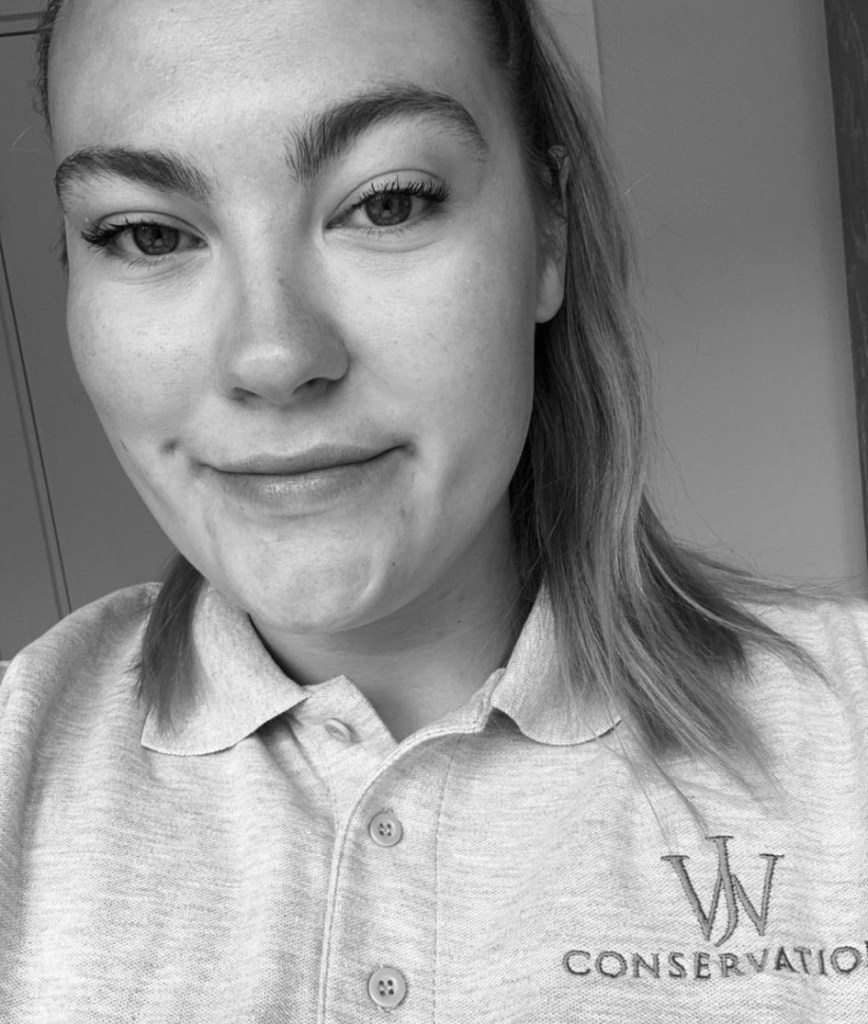
Sara-Mae Jordan
Sara-Mae joined the family business in 2016, working on a Grade I listed longhouse in Devon. Since then, she has continued to develop her skills in our built heritage, and she is currently working towards her NOCN Certificate in Assessing Vocational Qualifications in Roofing.
Over the last six years, Sara-Mae has developed hands-on experience repairing and restoring some of the oldest buildings in the country, as well as the knowledge to assess the issues these buildings present. She is also the only female traditional slate maker in the UK and heads up the slate-making team at W J Conservation.
David Anderson-Price
David’s experience and bio here


Robert Akisanya
After completing a degree in Psychology, Robert tried out a few potential careers but discovered a passion for traditional buildings after buying his first home with his partner in 2021.
Initially drawn to hand tool carpentry, Robert saw an opportunity to enter the world of heritage buildings in 2023 through the Historic England Heritage Skills Programme. Since joining W J Conservation, he has been learning traditional roofing and carpentry techniques on a variety of projects, including a 15th-century timber frame building, and a George Gilbert Scott church.
 WJ Conservation